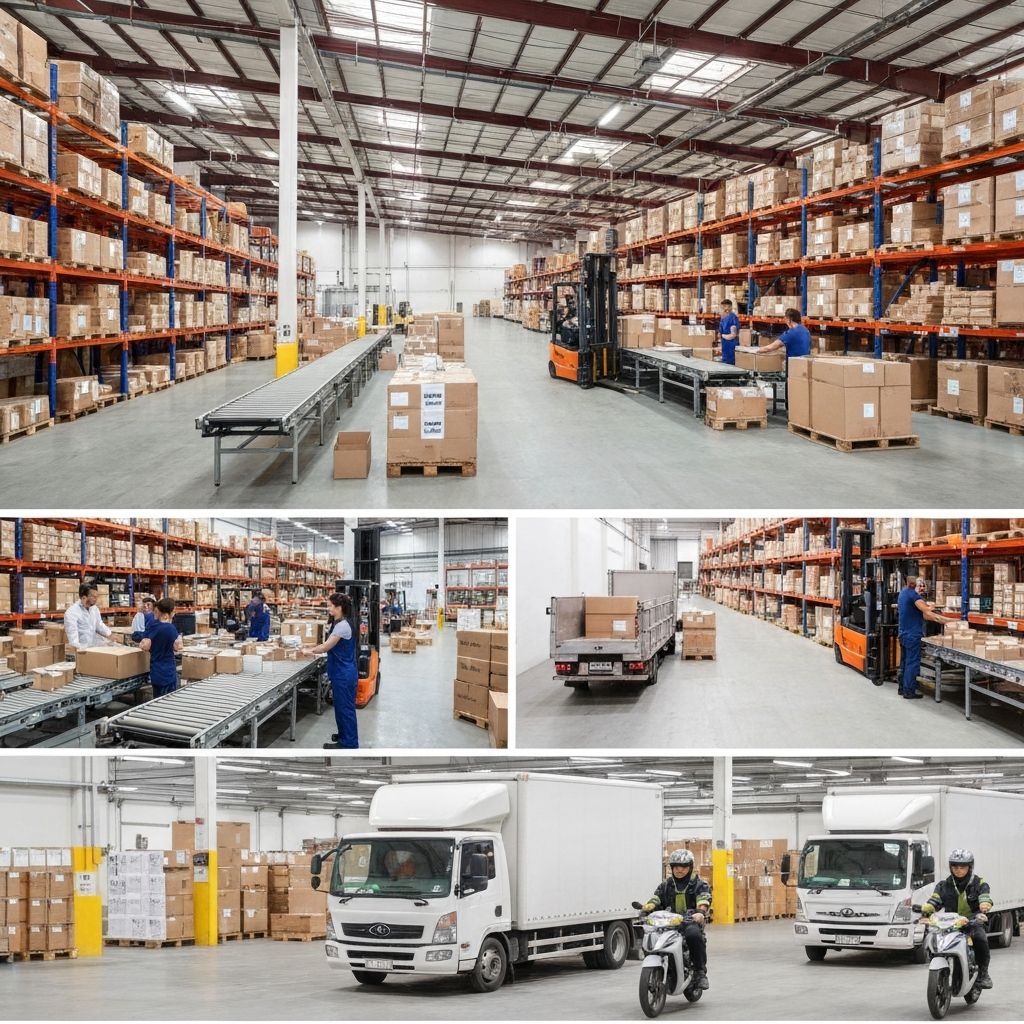
The Real Revolution: Inside the Warehouse
While the front end of AI shopping is flashy, the real revolution is happening in the warehouse. In 2026, AI infrastructure for logistics is growing at 83% annually. The 'Last Mile' — the final step of delivery — has always been the most expensive and volatile.
AI now 'stages' inventory in a micro-fulfillment center nearby before the orders are even placed. This allows for 'Sub-Hour Delivery' — a key competitive advantage in the 2026 market.
Risk Mitigation in Volatile Regions
In volatile regions, AI also acts as a 'Risk Mitigator.' It monitors traffic, fuel availability, and even geopolitical disruptions in real-time to reroute deliveries. For a site like PlugIT.deals, 'Shipping Speed' isn't just a number; it's a dynamic variable calculated by an AI that understands the local terrain.
Automation has taken over 60% of warehouse operations. From robotic picking arms to autonomous drones for rural delivery, the human element is moving toward 'Supervision' rather than 'Labor.' This efficiency is what allows for the 'Price War' to continue, as the overhead of logistics is slashed by intelligent automation.
Collective Shipping and Carbon Reduction
We are also seeing the rise of 'Collective Shipping' models, where AI groups orders from the same residential building or street to minimize carbon footprints and delivery costs. In Lebanon, where infrastructure can be unpredictable, this level of algorithmic coordination is the difference between a thriving business and a failed one.
The warehouse of the future is silent, dark, and perfectly efficient, running on a 24/7 cycle of predictive replenishment.